Record Data Sheet
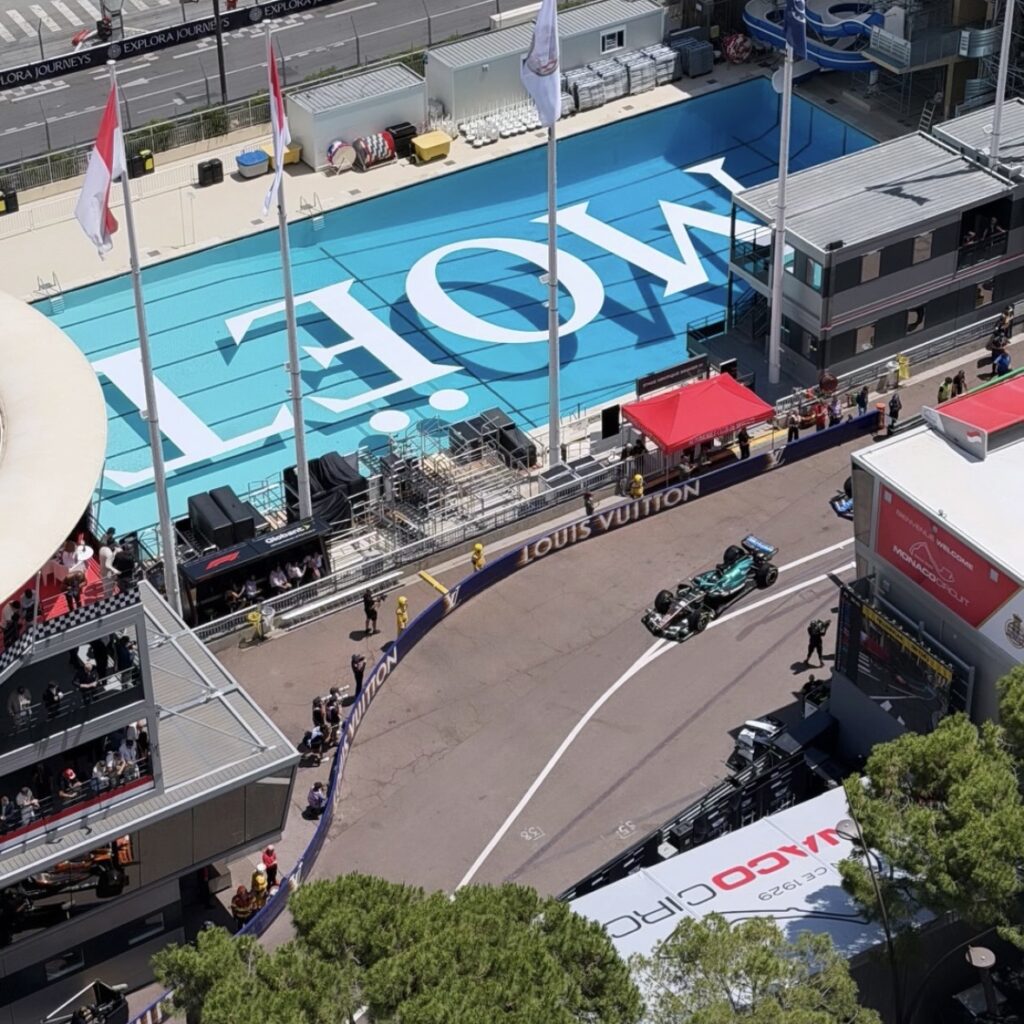
On Sunday afternoon, as Kimi Antonelli celebrated his win at the Monaco Grand Prix by leaping into the harbour, the few hectares of Monte Carlo held more wealth per square metre than anywhere else on earth. For four days a year, the hotel balconies, the superyacht decks and the private salons of Louis Vuitton and TAG Heuer turn Europe’s smallest principality into a showcase of fortunes. The natural temptation, faced with that scene, is to ask what the whole thing costs to stage and what Monaco gets back. That, almost always, is the wrong question.
Monaco pays roughly 20 million dollars a year to keep its race on the calendar, the lowest hosting fee on the entire grid and less than half of what newer venues such as Qatar, Saudi Arabia and Azerbaijan hand over, all of which sit above 50 million. Liberty Media spent years trying to renegotiate that privileged arrangement with little success, because no other host offers what Monte Carlo does; the principality has since extended its contract through 2031 at a somewhat higher but undisclosed fee. Against that outlay, the return that is actually audited looks modest. Monaco’s statistics office put the Grand Prix’s direct economic impact at around 90 million euros spread over four days, of which close to 68 million came from accommodation, dining and tickets, with the 2025 edition drawing more than 228,000 visitors. The hotel rates explain the figure: during the 2025 race weekend, occupancy approached
97 percent and the average room rate climbed past 3,500 euros on the busiest nights.
The number that misleads
Taken on its own, that figure invites an awkward conclusion. Ninety million is a serious sum for almost any city, but for an economy like Monaco’s, built on private banking, luxury real estate and the residence of large fortunes, it amounts to little more than a good week. If the Grand Prix were judged only by the takings of those four days, it would be hard to defend as anything other than an exercise in prestige. That discomfort is where the inflated numbers come from, the returns of a billion and more and the fifteen or twenty times multipliers that no serious source supports. They are attempts to put a figure to an instinct that is essentially correct, that the race is worth far more than its takings suggest. The trouble is that the value is not where people go looking for it.
The right question
The useful question is not how much Monaco earns during the Grand Prix, but what the Grand Prix does for Monaco the rest of the year. Framed that way, the race stops being a sporting event and becomes something else: the annual renewal of a brand. Four days in which the cameras of half the world once again attach the words Monaco, luxury, money and exclusivity to the same backdrop of the Mediterranean, the casino and the Grimaldi family. The principality never has to explain what it represents, because the image does it instead, and it does so every year without fail.
That exposure can be approximated, if imperfectly. Various analyses estimate that replicating the coverage Monaco receives over the weekend through conventional advertising would cost more than 100 million euros. In media value for sponsors, Formula 1 generated around 665 million dollars in the first half of 2025 alone, and the Monaco circuit performs above the average precisely because its slow, narrow layout keeps the signage in front of the camera longer. The championship’s cumulative annual audience reached roughly 1.83 billion viewers in 2025, across more than eighty countries. That a house like TAG Heuer has committed to a ten-year title sponsorship gives a sense of how much it is worth, for anyone buying image, to be associated with that stage.
What never shows up on an invoice
But even those figures measure the shop window, not the shop. The Grand Prix’s true dividend is the one that appears in no report: the fortunes that choose to make the principality their residence, the demand that sustains some of the highest property prices in the world, the capital that feeds its financial sector. After publishing its 90 million, the statistics office itself admits that the benefits to image and reputation far exceed the four days of the event and are difficult to quantify. That is the honest limit
of any serious analysis. No one has managed to isolate how much of that wealth comes to Monaco because of the Grand Prix and how much would have arrived anyway. The race and the principality’s prestige feed each other until they are inseparable, which makes it impossible to sign a clean figure beneath the return.
That impossibility, in the end, is why the magic numbers keep circulating. It is more comfortable to write “1.36 billion, seventeen times the investment” than to admit that the most valuable asset in the whole arrangement cannot be measured. But Monaco’s logic does not depend on the sums adding up. The principality does not pay 20 million for one weekend’s takings; it pays to remain, for four days a year, the global stage of wealth, and to collect that dividend across the other 361. The cleverest part of the entire deal is precisely that its real return appears on no invoice.
So who comes out ahead, Formula 1 or Monaco?
It is worth turning the question around to close. If Monaco pays the smallest fee on the grid and Qatar the largest, it is fair to ask who is getting more out of whom. The answer is that neither side loses, because the deal runs in both directions at once. Formula 1 gets from Monaco something it cannot manufacture: the glamour and the history that make the championship a byword for prestige. And it is precisely that prestige the sport then sells, at a premium, to the countries that want to buy it. Qatar, Saudi Arabia and Azerbaijan pay upwards of 50 million a year, in part, to attach themselves to a championship whose crown jewel is Monte Carlo. Without Monaco, that prestige would be worth less, and those venues would pay less for it.
Monaco, in turn, receives exactly what it needs to go on being Monaco. The race keeps its identity as the capital of luxury alive, once a year and in front of the entire world, an asset no tourism budget could buy and the one that underpins everything else: the resident fortunes, the property market, the financial sector. That is why the question of who gains more has no winner. Formula 1 needs Monaco to have a story worth selling, and Monaco needs Formula 1 to keep that story being told. It is one of those rare arrangements in which paying little and charging little turns out, for both sides, to be the best possible business.
Key figures: the Monaco Grand Prix economy
- Hosting fee: around 20 million dollars a year, the lowest on the Formula 1 calendar; renewed through 2031 at an undisclosed higher rate.
- Highest fee on the grid: Qatar, at roughly 55 million dollars a year.
- Direct economic impact (IMSEE): about 90 million euros over four days, of which close to 68 million came from accommodation, dining and tickets.
- 2025 attendance: more than 228,000 visitors across the weekend.
- 2025 hotels: occupancy near 97 percent and an average room rate above 3,500 euros on peak nights.
• Value of the media exposure: replicating it with conventional advertising would cost more than 100 million euros.
• Formula 1 annual audience: around 1.83 billion viewers across more than 80 countries (2025).
• History: held since 1929; the 2026 edition is the 83rd at the circuit and the 72nd as a World Championship round.
Frequently asked questions
How much does Monaco pay to host the Formula 1 Grand Prix?
Monaco pays around 20 million dollars a year, the lowest hosting fee on the calendar and less than half what newer venues such as Qatar or Saudi Arabia pay. Liberty Media pushed for years to raise it, and the principality has since extended its deal through 2031 at a higher but undisclosed fee.
How much does Monaco make from the Grand Prix?
The direct economic impact measured by Monaco’s statistics office is around 90 million euros over four days. Its real return is larger and unquantifiable: the brand value that attracts high-net-worth residents, supports the property market and feeds the financial sector all year.
How much does it cost to stage the Monaco Grand Prix?
There is no official public figure for the staging cost. The principality builds and dismantles a full street circuit every year, which is a considerable expense, but the numbers in circulation are estimates with no verifiable source.
Why does Monaco pay less than other circuits?
Because it gives Formula 1 a prestige and a history no new venue can replicate. Other circuits sell a track; Monaco sells a legend, and that gives it the leverage to pay less than venues competing for visibility.
Is the Monaco Grand Prix profitable?
On the direct takings of the four days the balance is modest, but its real profitability lies in the year-round brand value, difficult to quantify and far greater than the weekend’s impact.
Which country pays the most to host a Grand Prix?
Qatar pays the most, around 55 million dollars a year. It joined the calendar in 2021 and pays almost three times what Monaco does, with Saudi Arabia and Azerbaijan in similar territory.
How long has the Monaco Grand Prix been held?
The first race was run in 1929, and the 2026 event is the 83rd running. It has been part of the Formula 1 World Championship since the inaugural 1950 season, and the 2026 edition is its 72nd running as a championship round.
What are the oldest races in Formula 1?
Silverstone is usually counted as the oldest, since it hosted the very first World Championship race on 13 May 1950. Seven circuits made up that inaugural season, and four of them remain active Formula 1 venues today: Silverstone, the Circuit de Monaco, Spa-Francorchamps and the Autodromo Nazionale Monza. The others fell away: Switzerland’s Bremgarten closed after the country banned circuit racing on safety grounds, and France’s Reims-Gueux, a fast road course, was abandoned as the sport moved to purpose-built tracks. Indianapolis counted towards the championship in those early years, but it was run to American rules and was never really a Formula 1 venue.